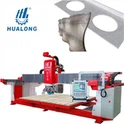
The key to the operation of the automatic polishing machine is to try to obtain a larger polishing speed in order to remove the damage layer that occurs during polishing as soon as possible.
Automatic polishing machine polishing is carried out in two stages. The goal of rough polishing is to remove the polished damage layer. This stage should have a larger polishing speed. The surface damage caused by rough polishing is an unnecessary consideration, but it should also be as small as possible; secondly, the automatic polishing machine is fine polishing (or final Throw), the goal is to remove the surface damage caused by rough polishing, so that the polishing damage is weakened.
When the automatic polishing machine is polishing, the grinding surface of the sample and the polishing disk should be kept parallel and lightly pressed on the polishing disk evenly, taking care to avoid the sample flying out and new wear marks due to too much pressure. At the same time, the sample should be rotated and moved back and forth along the radius of the turntable to prevent the polishing fabric from wearing too fast. During the polishing process, the polishing liquid or other polishing aids should be added from time to time. The automatic polishing machine makes the polishing fabric adhere to the necessary humidity. Too much humidity will weaken the effect of polished wear scars, causing the hard phase of the sample to appear embossed and non-metallic impurities in steel and graphite phase in cast iron to "tail trail". When the humidity is too small, friction and heat will cause the sample As the temperature rises, the smoothing effect decreases, the ground surface loses its luster, and even appears black spots. The light alloy will damage the appearance and will appear yellow.
এটি দেখা যায় যে স্বয়ংক্রিয় পলিশিং মেশিনের মসৃণতার গতিটি এখনও তার পলিশিং এফেক্টের উপর নির্দিষ্ট প্রভাব ফেলে। আমরা যখন সরঞ্জামগুলি পরিচালনা করি তখন পলিশিংয়ের কার্যকারিতা কার্যকর করার জন্য আমাদের অবশ্যই এটি নির্দিষ্ট গতিতে চালিত করতে হবে।